
JOYCONNECT
A better way to provide preventative care
JoyConnect is the new standard to refer and signpost to non-clinical interventions at scale. It helps divert pressure from overloaded appointments, optimising resources and enhancing patient care.
Works with any clinical system your team already uses, with the deepest integrations built for EMIS and SystmOne.

This patient could benefit from community support
AFC Richmond Wellbeing Walks, Richmond. Form pre-filled from the record.
Illustration, synthetic data
A small but mighty tool built for prevention at scale
Designed for healthcare staff and built to address prevention at scale. JoyConnect provides staff with relevant non-clinical interventions to refer and signpost.
Fast referrals and signposting
Effortlessly refer patients with pre-filled forms: Just a few clicks connect them to local services or approved health apps.
Pre-filled referral forms
Fill out only custom fields as JoyConnect automatically pre-fills all standard fields.
Synced with the patient's GP record
Simply tick a box and the referral information will sync with the patient's record.
Hardcoded SNOMED codes
Include SNOMED codes from a standardised list for better documentation.
JoyConnect Insights
Receive proactive prompts to suggest non-clinical support for patients. JoyConnect utilises NHS records and patient data to surface personalised local services.
Personal
Customised for each patient, aiming to reinforce preventive care efforts.
Contextual
Insights are based on various factors including location, attendance and clinical data.
Actionable
Patient insights drive more holistic treatment choices.
Refer now, or come back to it later
Every opportunity Joy surfaces during a consultation gives the clinician a clear choice: refer right now, or defer it to Proactive care to action when the time is right.
Proactive care is the single place where all those deferred opportunities collect: a live case list showing who was flagged, what was sent, and where each case stands. Nothing falls through the cracks.
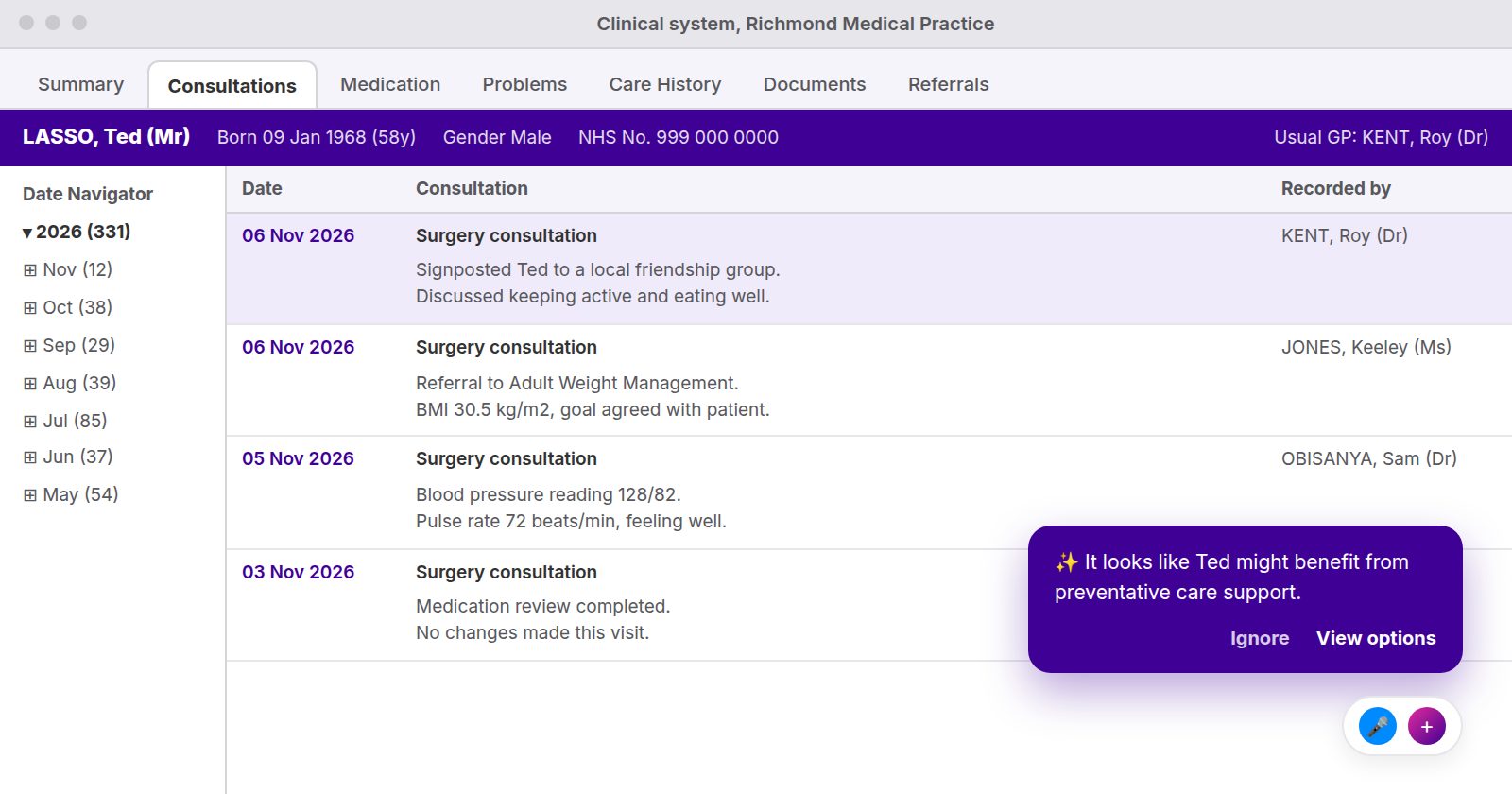
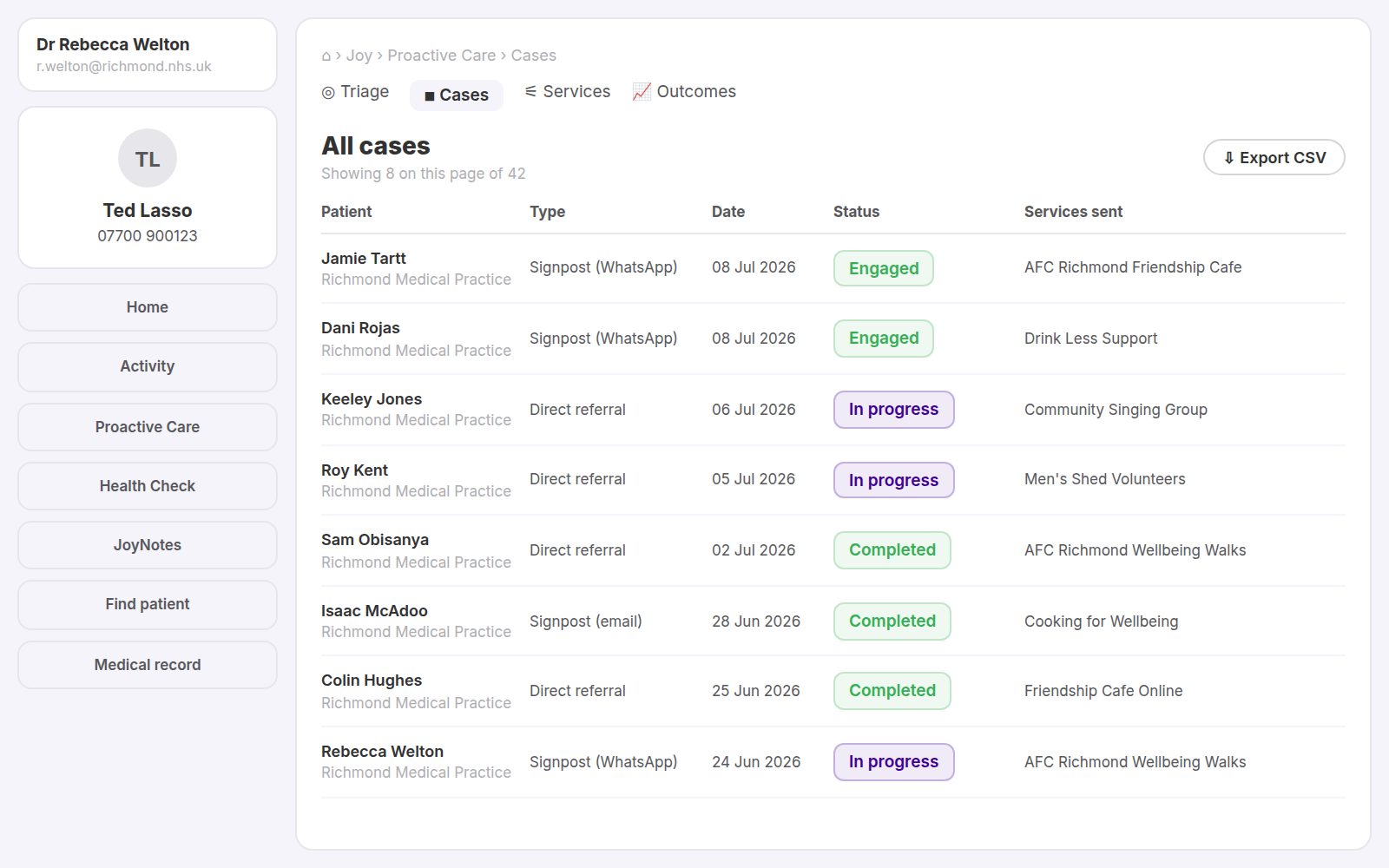
Screens shown are illustrations of the product with fictional example patients. No real patient data is shown.
VIDEO · 2:39
Joy’s Proactive Care Module for Neighbourhood Health
A short introduction to Joy’s proactive care module for neighbourhood health.
Checking your video access…
What it looks like in practice
Illustrations of Joy in the clinical system, drawn to match the product with a fictional patient. The service catalogue, guided referral pathways, smart service search, and pre-filled referral forms: all there, in a few clicks.
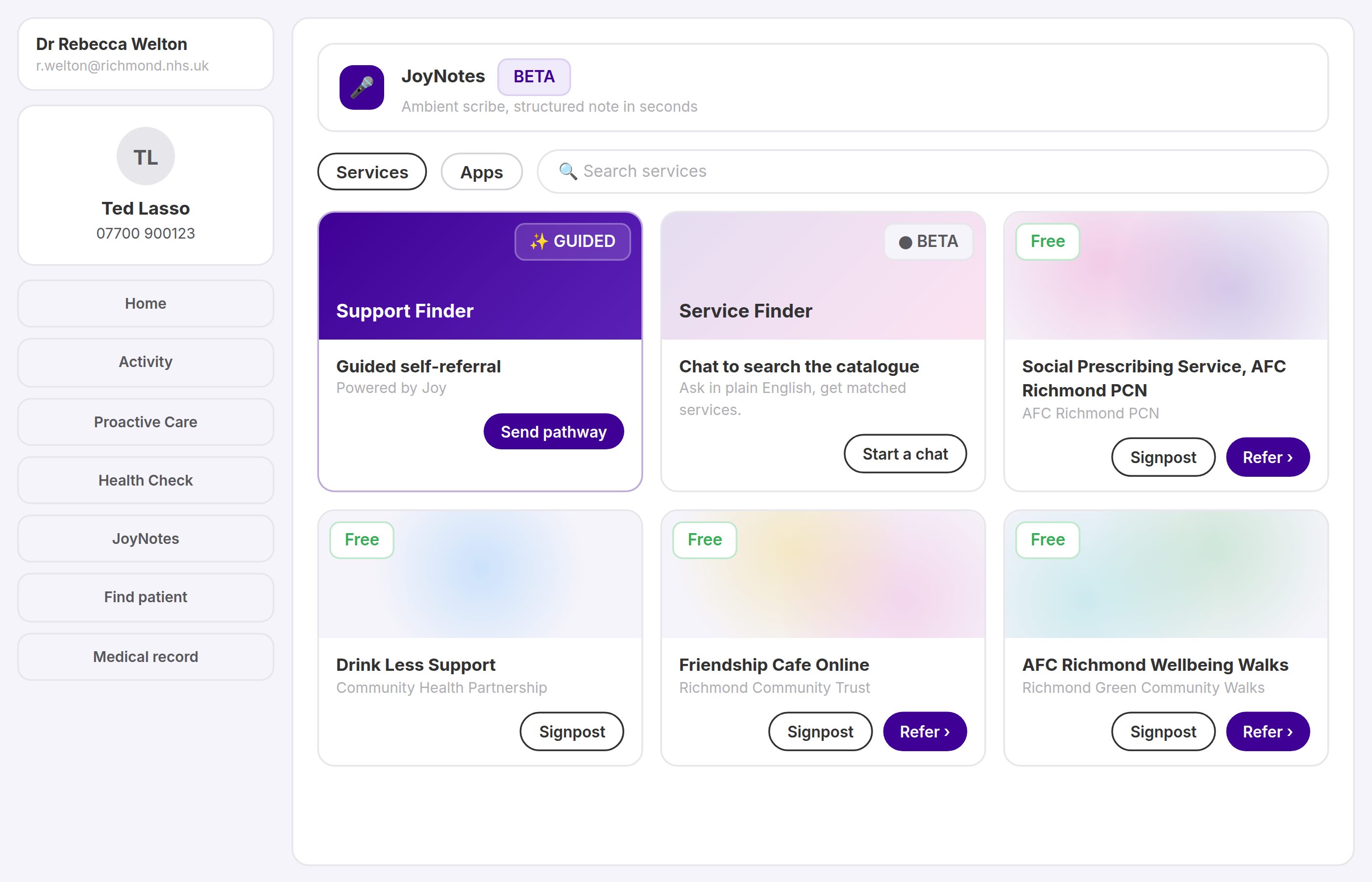
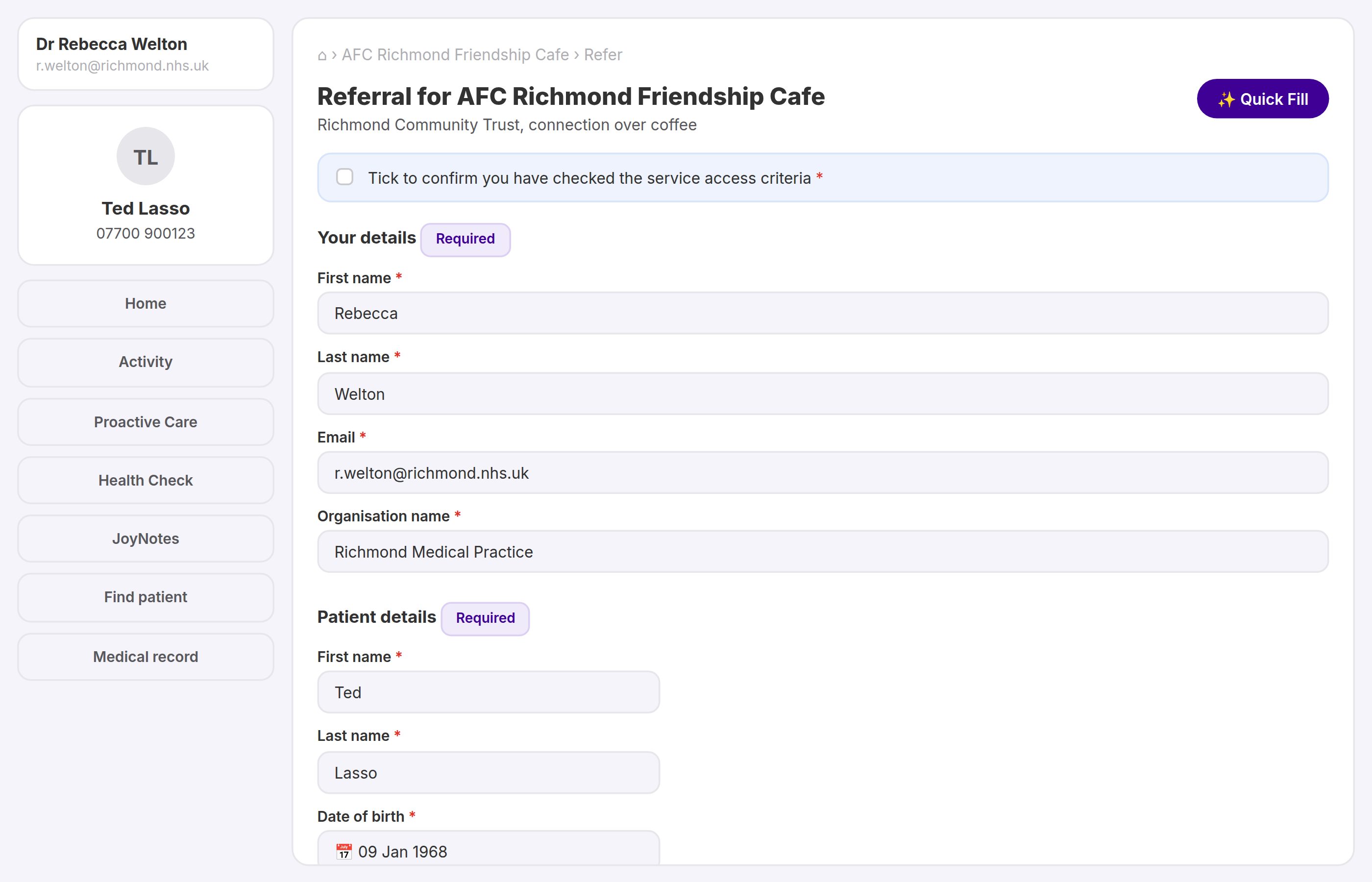
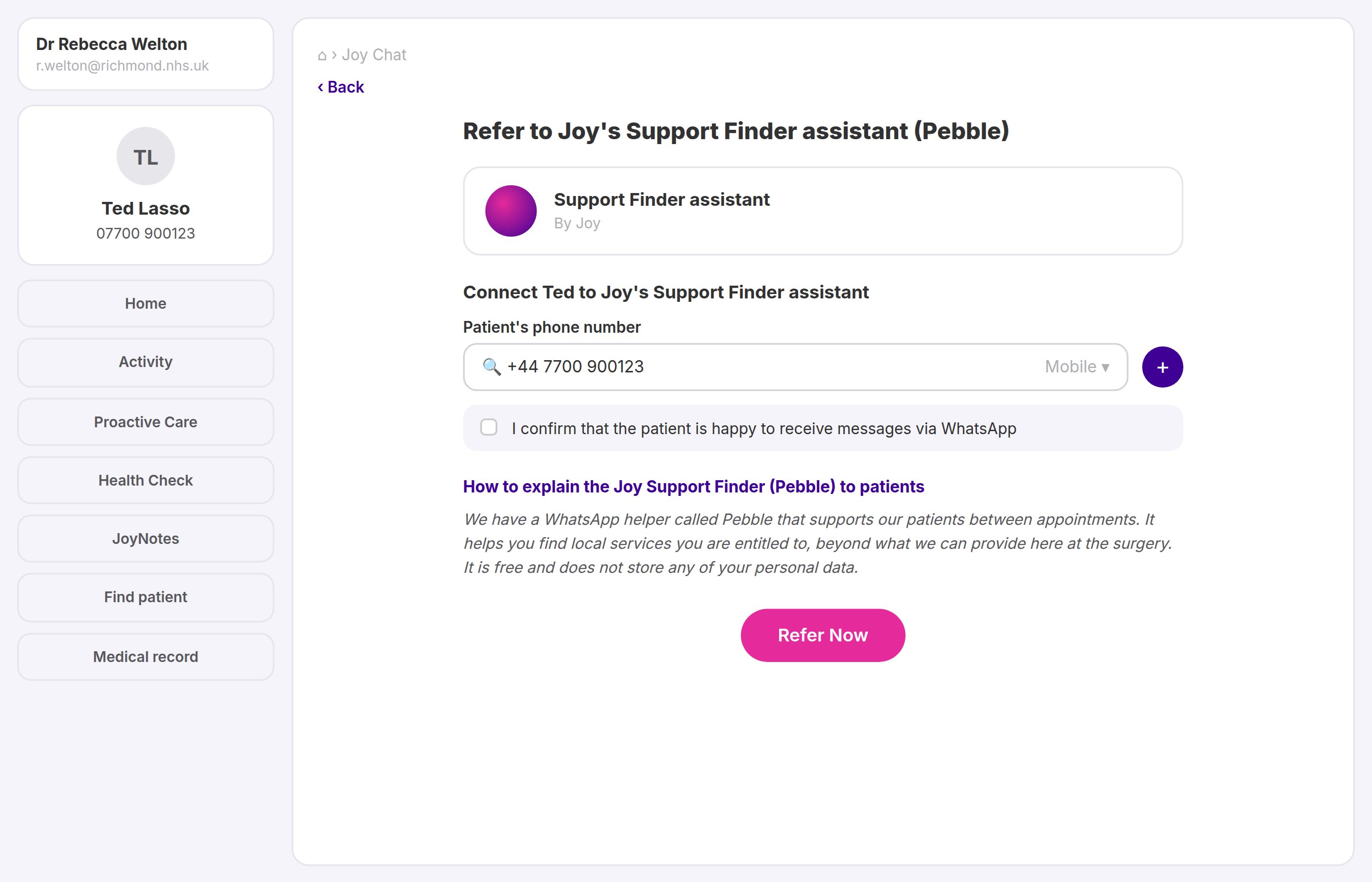
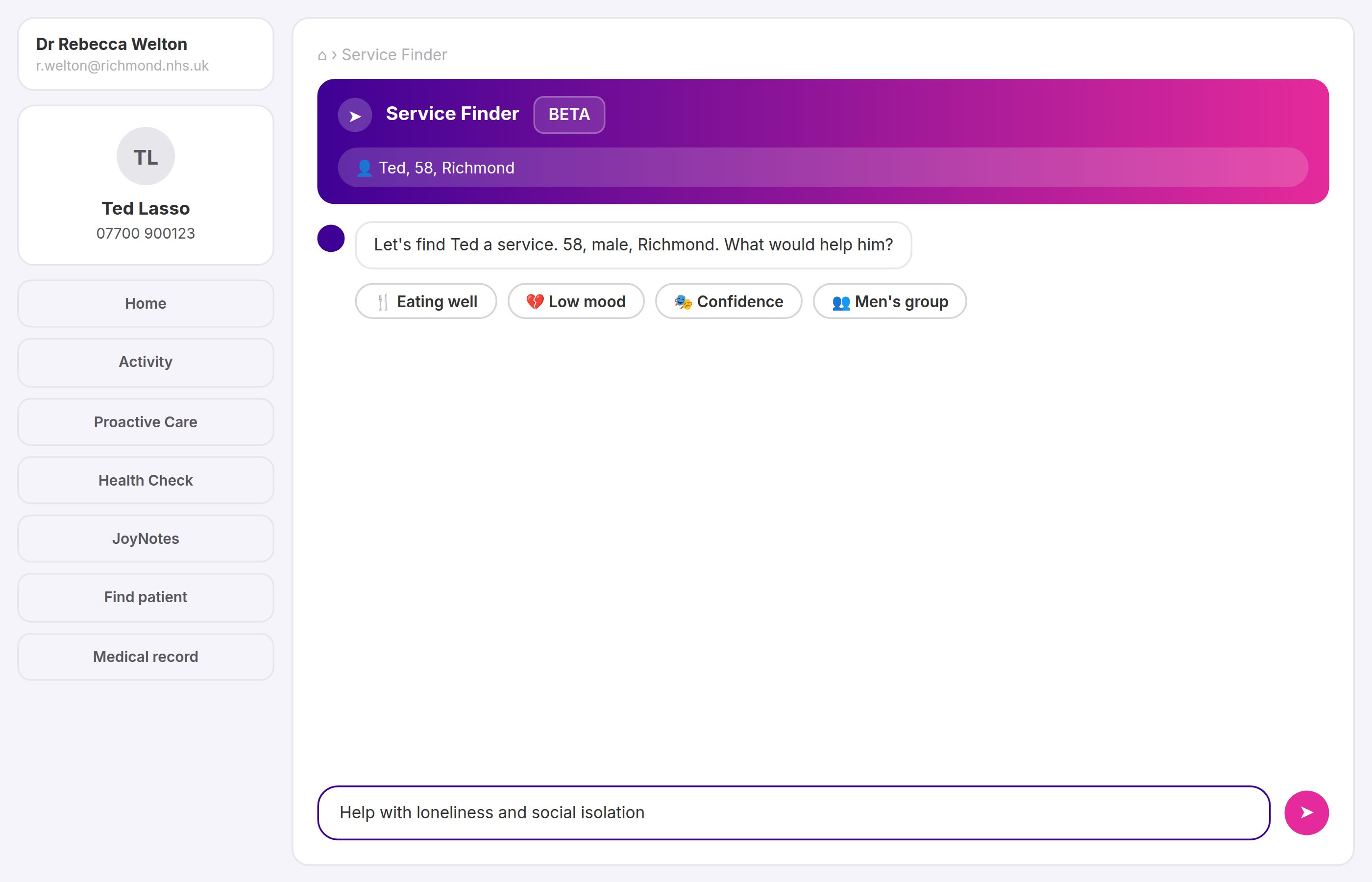
These panels are illustrations of the product with fictional patients and services. No real patient data is shown.
Inside the JoyConnect app
The full workflow lives in one place: find a service, refer or signpost in a couple of clicks, then see everything that happened for the patient afterwards.
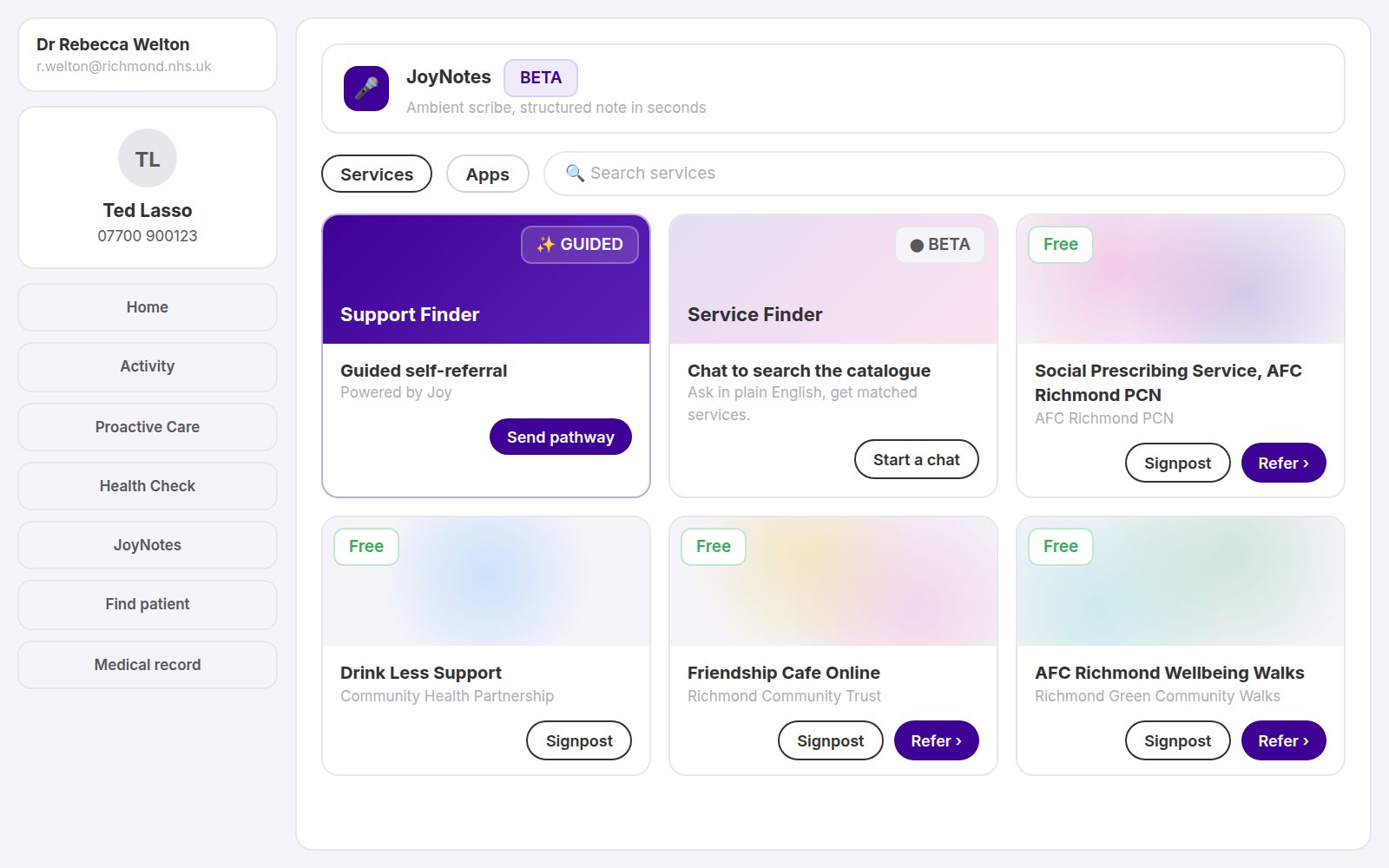
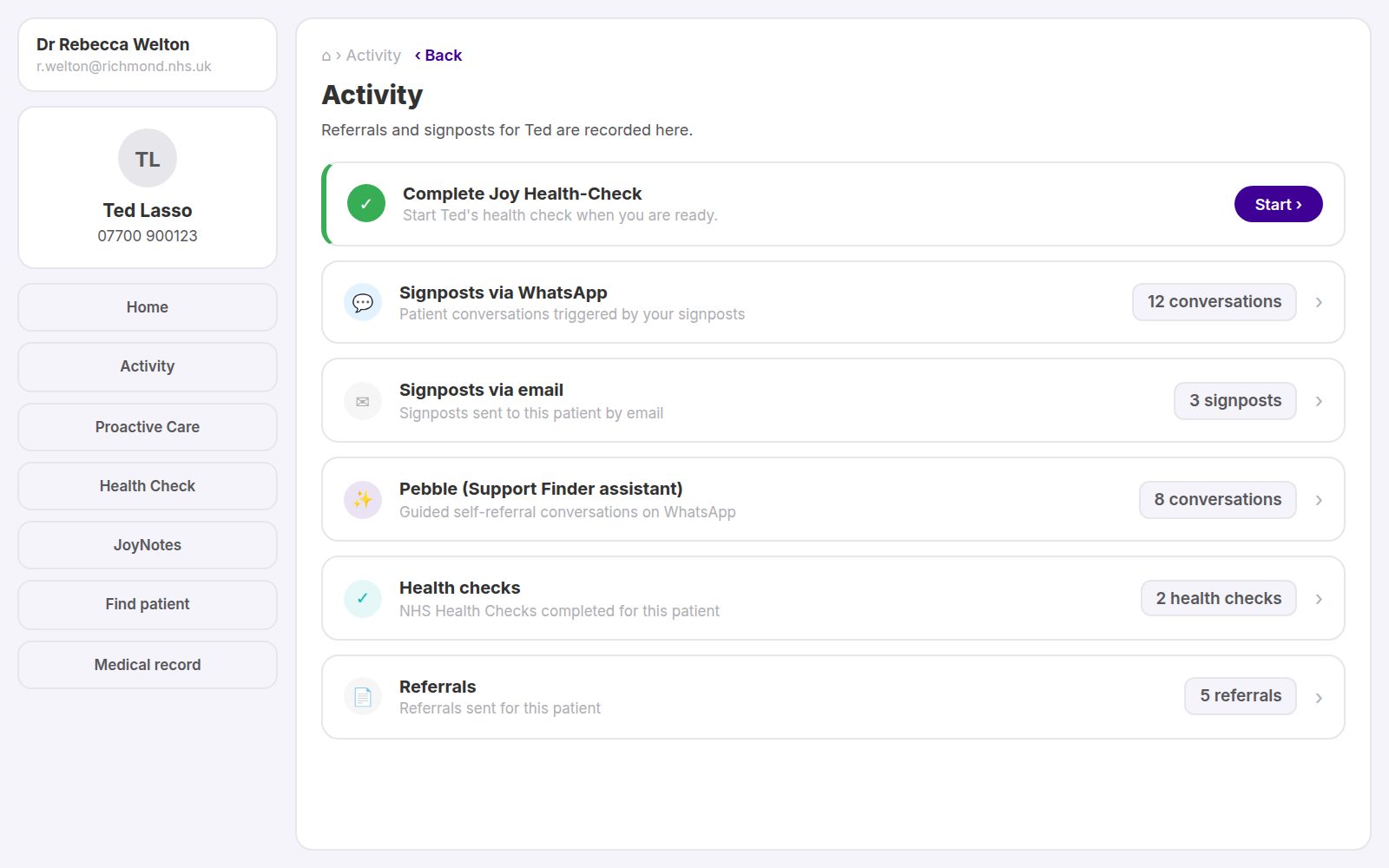
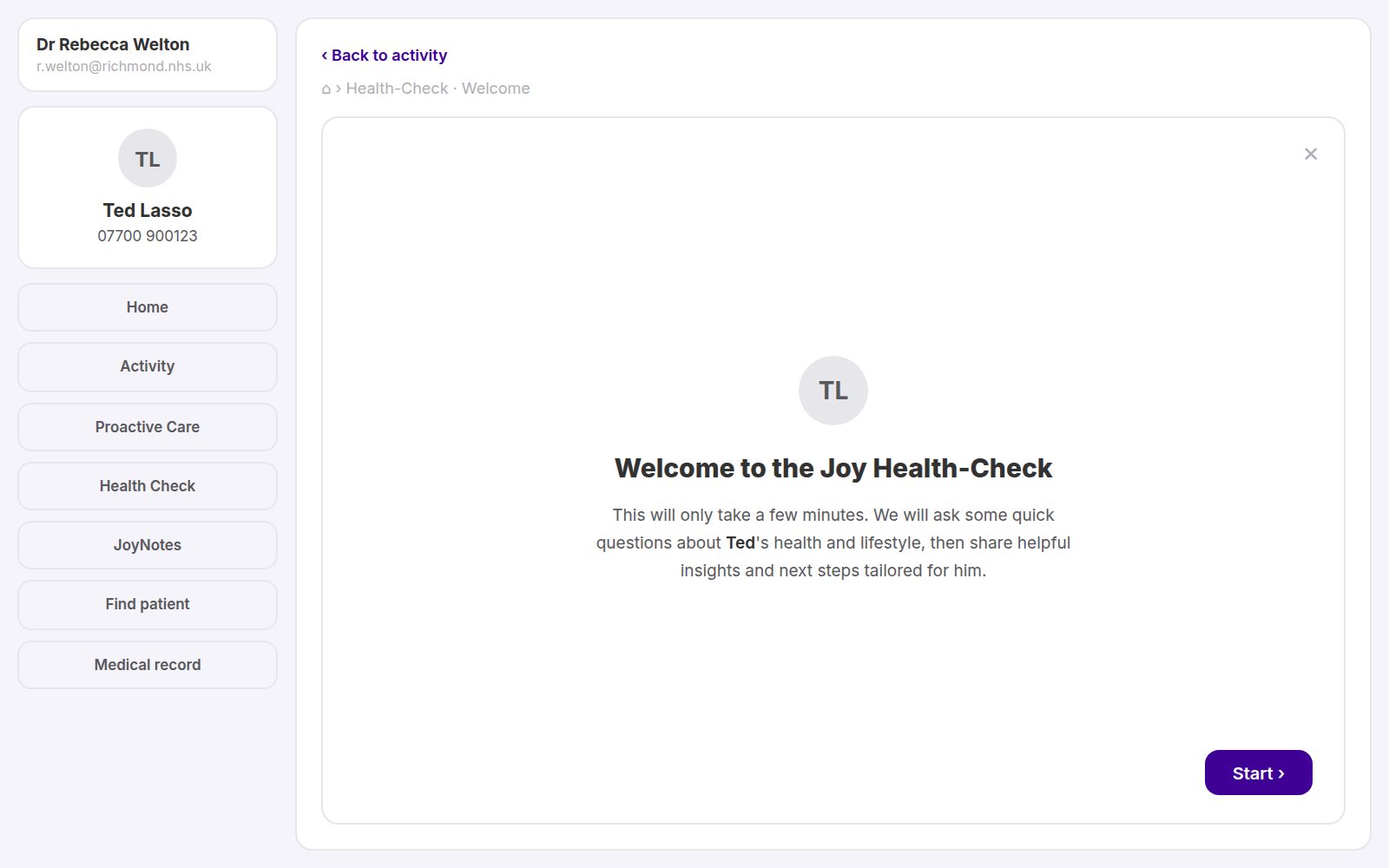
Screens shown are illustrations of the product with fictional example patients. No real patient data is shown.
The impact, in numbers.
Data suggests that shifting the focus on prevention and proactively referring into non-clinical services will defer pressure on your organisation.
of appointments could be redirected to a local service.
Source: Joy analysis of published primary care research
of a GP's time is with a patient whose health could be improved by accessing a preventative intervention
Source: Joy analysis of published primary care research
of patients take 40% of GP appointments, while a GP appointment is not always necessary.
Source: Joy analysis of published primary care research
of illness, disability, and premature deaths are due to preventable factors, such as lifestyle and social issues.
Source: Joy analysis of published public health research